Single Sphere Rubber Expansion Joint
A single sphere rubber expansion joint is a compact flanged flexible connector used to isolate vibration, reduce structure-borne noise, compensate controlled pipeline movement and protect pumps, valves, chillers, cooling towers and connected piping from mechanical stress. Its molded elastomer sphere flexes under axial, lateral and angular movement while reinforced cord layers help the joint resist the specified internal pressure.
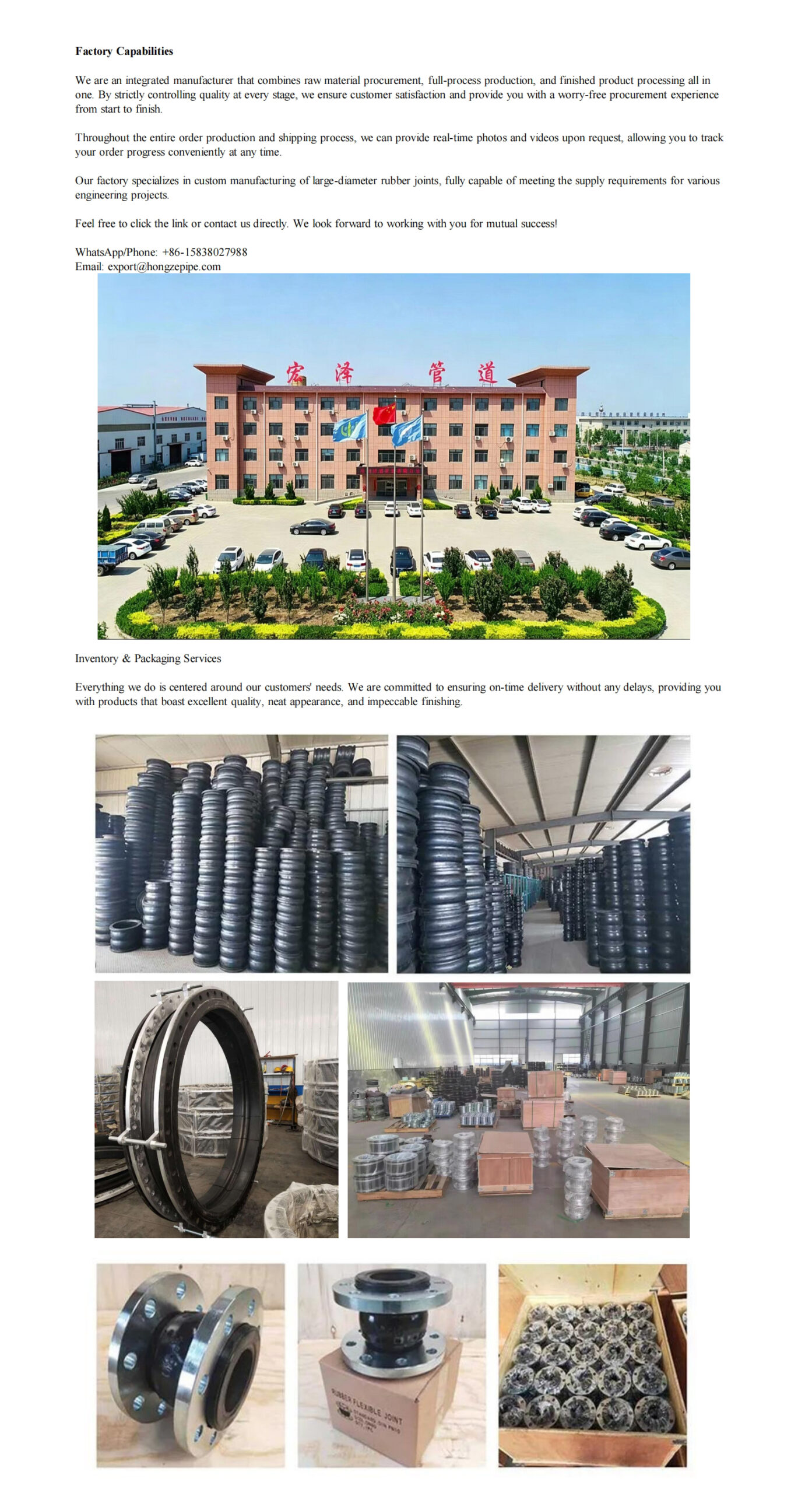
Zhengzhou Hongze Valve Pipeline Equipment Co., Ltd. manufactures and supplies single sphere flexible rubber joints for water treatment, HVAC, pump rooms, marine systems, power plants, chemical processing and general industrial pipelines. Standard reference sizes are available from DN32 to DN1200. Larger diameters, non-standard face-to-face lengths, special flange drilling and structures made according to drawings can be evaluated for each project.
Engineering note
The correct joint is selected from the complete operating conditions—not diameter alone. Please confirm medium, temperature, normal and design pressure, vacuum, movement, installation length, mating flange standard, equipment arrangement and required service life. Flange drilling or flange pressure class describes the mating flange pattern; it does not by itself establish the allowable working pressure of the rubber joint.
Key Functions and Product Advantages
- Vibration isolation: helps reduce vibration transmitted from pumps, compressors and rotating equipment into the piping network.
- Noise reduction: the elastomer body can interrupt part of the structure-borne noise path between connected equipment and pipework.
- Movement compensation: accommodates specified axial compression, axial extension, lateral offset and angular deflection within the approved movement envelope.
- Stress reduction: helps reduce loads caused by thermal movement, equipment vibration and minor installation deviation when the piping is correctly anchored and guided.
- Compact single-sphere design: provides flexible performance with a shorter face-to-face length than many multi-sphere arrangements.
- Media-specific elastomers: EPDM, NBR, NR, CR, IIR and FKM compounds are available for different fluids and temperatures.
- Project-specific connections: flange drilling can be matched to ASME/ANSI, EN/DIN, JIS, BS, AWWA, GB or customer drawings.
- Large-diameter capability: sizes above the standard table can be produced after engineering review of pressure, vacuum, movement, reinforcement, flange geometry and transport limits.
Construction and Main Components
| Component | Typical Material | Function |
|---|
| Inner tube | EPDM, NBR, NR, CR, IIR, FKM or specified compound | Contacts the conveyed medium and provides the primary fluid barrier. |
| Reinforcement layers | High-strength synthetic cord fabric; quantity and angle by design | Supports pressure resistance and controls deformation of the rubber sphere. |
| Bead reinforcement | Steel wire or reinforced bead construction | Secures the molded rubber bead in the retaining flange and transfers load. |
| Outer cover | Weather-resistant elastomer selected for the environment | Protects reinforcement from ozone, weather, abrasion and external contamination. |
| Retaining flanges | Carbon steel, galvanized steel, SS304 or SS316 | Connects the joint to mating pipe flanges and retains the rubber bead. |
| Optional accessories | Control units, tie rods, sleeves, PTFE liner, vacuum support and protective cover | Added when required by pressure thrust, vacuum, abrasive flow, chemicals or external exposure. |
Technical Specification Range
| Item | Available Specification |
|---|
| Product | Flanged single sphere flexible rubber expansion joint |
| Reference size range | DN32–DN1200 in the table below; larger diameters by engineering review and approved drawing |
| Rubber compounds | NR, EPDM, NBR, CR/Neoprene, IIR/Butyl, FKM; special compounds on request |
| Optional wetted lining | PTFE-lined construction for compatible corrosive media, subject to design confirmation |
| Flange materials | Carbon steel, galvanized carbon steel, SS304, SS316/316L or specified material |
| Mating flange drilling | ASME/ANSI, EN/DIN, JIS, BS, AWWA, GB or drawing-specific drilling |
| Movement modes | Axial compression, axial extension, lateral displacement and angular deflection |
| Pressure and vacuum | Designed and verified according to size, construction, temperature, medium, movement and service conditions; vacuum support available when required |
| Face-to-face length | Standard reference lengths or custom length according to installation drawing |
| Customization | Large diameter, special length, special drilling, offset, reducer ends, control units, sleeve, liner, reinforcement and marking |
Reference Connection Dimensions: DN32–DN1200
The following dimensions are a product-family reference for preliminary selection. Alternative face-to-face lengths and movement values are available. The approved Hongze drawing and order specification govern the supplied product. Movement values must not be added together unless the approved design specifically permits combined movement.
| DN | Inch | Length L (mm) | Axial Extension (mm) | Axial Compression (mm) | Lateral Movement (mm) | Angular Deflection |
|---|
| 32 | 1.25 | 95 / 130 / 152 | 6 | 9 | 9 | 15° |
| 40 | 1.5 | 95 / 130 / 152 | 6 | 10 | 9 | 15° |
| 50 | 2 | 105 / 130 / 152 | 7 | 10 | 10 | 15° |
| 65 | 2.5 | 115 / 130 / 152 | 7 | 13 | 11 | 15° |
| 80 | 3 | 130 / 135 / 152 | 8 | 15 | 12 | 15° |
| 100 | 4 | 130 / 135 / 150 | 10 | 19 | 13 | 15° |
| 125 | 5 | 130 / 152 / 165 | 12 | 19 | 13 | 15° |
| 150 | 6 | 130 / 152 / 180 | 12 | 20 | 14 | 15° |
| 200 | 8 | 130 / 152 / 180 / 200 / 210 | 16 | 25 | 22 | 15° |
| 250 | 10 | 130 / 200 / 230 / 240 | 16 | 25 | 22 | 15° |
| 300 | 12 | 130 / 200 / 245 / 260 | 16 | 25 | 22 | 15° |
| 350 | 14 | 200 / 255 / 265 | 16 | 25 | 22 | 15° |
| 400 | 16 | 200 / 255 / 265 | 16 | 25 | 22 | 15° |
| 450 | 18 | 200 / 255 / 265 | 16 | 25 | 22 | 15° |
| 500 | 20 | 200 / 255 | 16 | 25 | 22 | 15° |
| 600 | 24 | 200 / 260 | 16 | 25 | 22 | 15° |
| 700 | 28 | 260 | 16 | 25 | 22 | 15° |
| 800 | 32 | 260 | 16 | 25 | 22 | 15° |
| 900 | 36 | 260 | 16 | 25 | 22 | 15° |
| 1000 | 40 | 260 | 18 | 26 | 24 | 15° |
| 1200 | 48 | 260 | 18 | 26 | 24 | 15° |
Important: Values are preliminary reference data, not a universal pressure/movement guarantee. Actual dimensions, pressure capability, vacuum capability and allowable movement depend on compound, reinforcement, temperature, medium, size and manufacturing drawing.
Rubber Material Selection Guide
Elastomer selection is based on the exact chemical medium, concentration, temperature, pressure, cleaning cycle and external environment. The ranges below are general screening guidance only; final compatibility must be reviewed for the actual service.
| Material | Typical Service | General Screening Range* | Selection Notes |
|---|
| NR | Water, air, vibration isolation | Approx. −20 to +80°C | Good elasticity; generally unsuitable for petroleum oils and prolonged ozone exposure without a suitable cover. |
| EPDM | Water, hot water, air, seawater, many weak acids and alkalis | Approx. −20 to +120°C | Good weather and ozone resistance; generally not suitable for petroleum oil. Steam service requires compound-specific confirmation. |
| NBR | Mineral oil, lubricating oil and oily water | Approx. −20 to +100°C | Good oil resistance; check fuel composition, aromatics, weathering and ozone exposure. |
| CR / Neoprene | Seawater, weather-exposed service, air and selected industrial fluids | Approx. −20 to +100°C | Balanced weather, ozone and moderate oil resistance; verify chemical compatibility. |
| IIR / Butyl | Low gas-permeability service and selected chemicals | Approx. −20 to +120°C | Useful where low gas permeability is important; confirm compound and medium. |
| FKM | Oils, fuels, many chemicals and higher-temperature service | Approx. −20 to +180°C | High chemical and heat resistance for many duties; hot water, steam, amines and low-temperature service require careful verification. |
| PTFE-lined | Selected corrosive acids, alkalis and chemicals | Project-specific | Liner design may change movement and vacuum capability; complete chemical and operating data are required. |
*Indicative screening values, not guaranteed limits. Continuous temperature, pressure derating, chemical concentration, cycling and compound formulation can materially change suitability.
Flange Standards and Connection Options
Hongze can manufacture retaining flanges with drilling matched to the project mating flanges. ASME B16.5 covers common steel flange sizes through NPS 24, while ASME B16.47 addresses large-diameter steel flanges from NPS 26 through NPS 60. For a rubber expansion joint, these references identify the mating flange dimensions and drilling; the rubber joint pressure rating remains a separate engineered value.
| System | Common Options | Information Required |
|---|
| ASME / ANSI | B16.5 or B16.47 drilling; project-specified class | NPS/DN, class, series where applicable, flange face and bolt-hole orientation |
| EN / DIN | EN 1092-1 or project DIN drilling; PN10, PN16, PN25, PN40 as specified | DN, PN, face, flange OD, PCD and hole details |
| JIS / BS / AWWA / GB | JIS 10K/16K, BS, AWWA and GB patterns | Exact standard edition, nominal size and pressure designation |
| Non-standard | Custom OD, PCD, hole quantity, hole diameter, thickness and face geometry | Approved drawing, mating flange dimensions or physical sample |
Movement Capability and Selection
| Movement | Description | Design Consideration |
|---|
| Axial compression | Reduction of face-to-face length along the pipe axis | Confirm operating and installation compression; do not bottom out the sphere. |
| Axial extension | Increase of face-to-face length along the pipe axis | Pressure thrust and anchor design are critical; control units may be required. |
| Lateral movement | Offset perpendicular to the pipe axis | Requires adequate joint length and correct guide spacing; avoid torsion. |
| Angular deflection | Angular rotation between the two flange faces | Confirm the center of rotation and combined movement with the approved drawing. |
Large-Diameter and Drawing-Based Customization
Large-diameter single sphere rubber expansion joints are available beyond the standard DN1200 reference range when the engineering conditions allow. Each large-size joint is reviewed individually because internal pressure thrust increases rapidly with effective area, and handling, flange stiffness, vacuum stability and installation tolerances become more important as diameter increases.
| Custom Item | Available Engineering Options |
|---|
| Diameter | DN above 1200 subject to pressure, vacuum, movement, manufacturing and transport review |
| Geometry | Custom face-to-face length, flange OD, bolt pattern, reducer ends, eccentric arrangement and special profile |
| Operating design | Custom reinforcement, pressure design, vacuum support, reduced or enhanced movement, and cycling requirements |
| Protection | Inner sleeve for flow protection, PTFE liner for compatible chemicals, external cover and control-unit assemblies |
| Documentation | Approval drawing, material records, inspection reports, test plan and project marking as agreed |
Optional Accessories
- Control units / tie rods: limit extension or transfer pressure thrust when the piping system does not provide adequate anchoring. Rod size, plate design and allowable travel must be engineered.
- Internal flow sleeve: considered for high velocity, turbulent flow, abrasive solids or when a smoother flow path is required; sleeve direction must match flow.
- Vacuum support: reinforcement or an internal vacuum ring may be required for suction, transient vacuum or full-vacuum service.
- PTFE lining: isolates the elastomer from selected aggressive chemicals; movement and vacuum limits require separate confirmation.
- External protective cover: protects against splash, sunlight, weather, debris or accidental mechanical damage when specified.
- Flange coating: galvanizing, epoxy coating, paint or stainless steel selection according to the external environment.
Manufacturing, Inspection and Quality Documentation
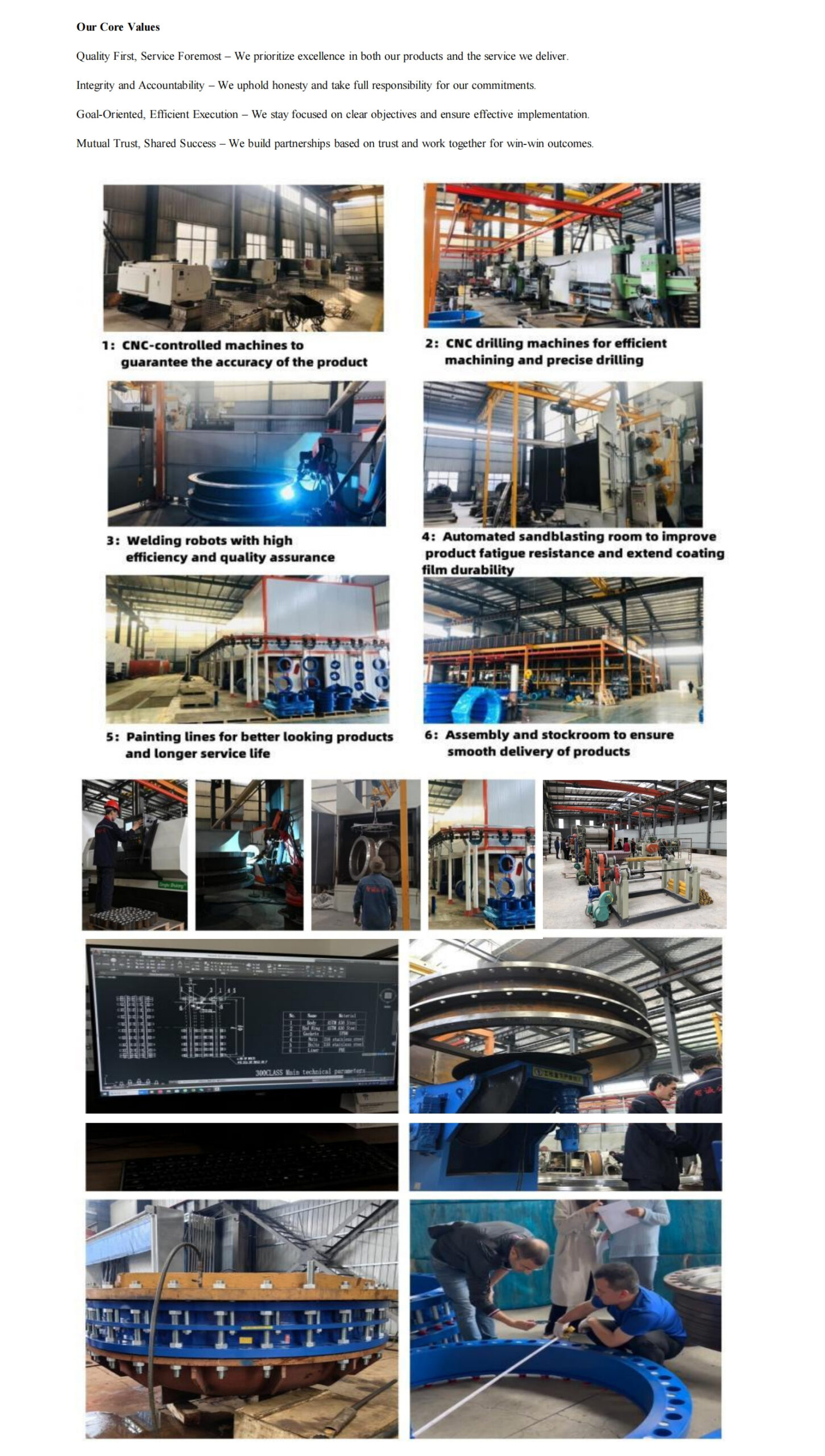
Each order can be controlled against the approved specification and drawing. Inspection scope is agreed before production so the supplied documents match the project requirements.
- Incoming verification of rubber compound, reinforcement materials and flange material.
- Mold preparation, rubber lay-up, cord reinforcement placement and controlled vulcanization.
- Visual inspection for surface defects, bead condition and workmanship.
- Dimensional verification of face-to-face length, flange OD, PCD, holes, thickness and overall geometry.
- Pressure testing, leak testing, vacuum testing or burst/type testing when specified and applicable to the design.
- Rubber physical-property test reports, flange material certificates and coating records when ordered.
- PMI for stainless steel parts, third-party inspection, special marking and export documentation on request.
Installation and Maintenance Guidelines
Correct installation is essential to safe service. Industry guidance from the Fluid Sealing Association emphasizes inspection, correct alignment, proper anchors and guides, controlled bolt tightening and periodic maintenance for rubber expansion joints.
- Inspect before installation. Check the rubber body, flange beads, control units and mating flange surfaces for damage, contamination or sharp edges.
- Confirm the system design. Install anchors, guides and pipe supports capable of resisting pressure thrust and other loads. Do not rely on the rubber joint to support pipe weight.
- Align the mating flanges. Flanges should be parallel, concentric and at the specified gap. Do not force severe pipe misalignment into position with the joint.
- Avoid torsion. Keep bolt holes aligned and prevent twisting the rubber body during installation.
- Install fasteners correctly. Use washers where required and tighten bolts gradually in a cross pattern. Avoid over-compressing or cutting the rubber flange bead.
- Set control units. Where supplied, adjust rods and nuts to the travel stated on the approved drawing; they must not unintentionally lock out required movement.
- Protect the rubber. Keep welding heat, sparks, paint, sharp tools, oil and incompatible chemicals away from the elastomer. Complete nearby welding before installation whenever possible.
- Commission gradually. Fill and pressurize the system in a controlled manner while checking alignment, leakage and abnormal deformation.
- Inspect periodically. Check for cracking, blistering, cover wear, softening/hardening, leakage, flange corrosion, loose hardware and excessive movement. Replace a damaged joint; do not attempt an unsafe field repair.
Typical Applications
- Pump suction and discharge connections
- Water treatment and wastewater plants
- Municipal water supply and drainage
- HVAC chilled-water and hot-water systems
- Cooling towers and condenser-water circuits
- Fire-water and utility-water systems
- Power generation and auxiliary pipelines
- Chemical and process plants
- Marine and shipbuilding pipelines
- Mining and industrial water service
- Air-handling and compressor connections
- General industrial equipment connections
How to Specify a Single Sphere Rubber Expansion Joint
For an accurate technical proposal and quotation, please provide:
| Required Data | Example / Explanation |
|---|
| Size and quantity | DN300, 4 pieces |
| Medium and concentration | Cooling water, seawater, lubricating oil, acid solution with concentration |
| Temperature | Normal, minimum, maximum and cleaning temperature |
| Pressure and vacuum | Normal pressure, design pressure, test pressure, transient and vacuum condition |
| Movement | Axial compression/extension, lateral offset, angular movement and cycles |
| Connections | Flange standard, class/PN, face, drilling and flange material |
| Installation | Face-to-face length, horizontal/vertical, indoors/outdoors, anchors and guides |
| Special requirements | Control rods, PTFE liner, sleeve, vacuum ring, coating, testing and documentation |
| Drawing | Pipeline arrangement, mating-flange drawing or existing joint drawing/sample |
Why Choose Hongze Pipe?
- Project-based selection support for rubber compound, pressure, movement, flange drilling and accessories.
- Standard and non-standard production, including large diameters and manufacturing according to drawings.
- Matching pipeline products, including flanges, fasteners, reducers, metal hoses and expansion joints.
- Approval drawings and inspection documentation prepared according to agreed project requirements.
- Export packing, marking and documentation support for international projects.
- Direct technical communication for OEM, replacement and new-construction requirements.
Frequently Asked Questions
What is a single sphere rubber expansion joint used for?
It is used between flanged pipe sections to isolate vibration, reduce noise and accommodate approved axial, lateral or angular movement. Typical locations include pump connections, chillers, cooling towers, water-treatment equipment and industrial pipelines.
What is the difference between single sphere and double sphere rubber joints?
A single sphere joint is compact and well suited to general vibration isolation and movement compensation. A double sphere design can provide greater movement in some size ranges but is longer and may require more careful stability and control-unit review. Selection depends on movement, pressure, space and system layout.
Can you manufacture diameters larger than DN1200?
Yes, large diameters can be evaluated and manufactured according to drawings. Please provide pressure, vacuum, temperature, medium, movement, flange dimensions, installation length and quantity. Feasibility and construction are confirmed in the approved drawing.
Does an ASME Class 150 flange make the rubber joint Class 150?
No. Class 150 defines the mating flange dimensional/pressure class within its applicable standard. The rubber expansion joint has its own allowable pressure determined by size, construction, compound, temperature and service. Both requirements must be specified separately.
Which rubber is suitable for water?
EPDM is commonly selected for water, hot water and outdoor water-service applications, while NR may suit some general water duties. Potable-water, food, steam or special regulatory service requires a specifically approved compound and documentation.
Which rubber is suitable for oil?
NBR is commonly used for many mineral oils and oily-water applications. FKM may be considered for higher temperatures or more demanding fuels and chemicals. Exact oil composition, aromatics, temperature and additives must be checked.
Can a rubber expansion joint operate under vacuum?
Only when the selected construction is rated for the specified vacuum. Suction or full-vacuum conditions may require additional reinforcement or a vacuum support ring. Please state normal and maximum vacuum when requesting a quotation.
Are control rods always required?
Not always. They may be required when anchors are absent or inadequate, when extension must be limited, or when system design requires thrust restraint. The piping engineer should evaluate pressure thrust, anchors, guides and equipment nozzle loads.
Can one joint take axial and lateral movement at the same time?
Combined movement normally reduces the amount available in each direction. Do not add the table values. Provide the combined movement case so Hongze can confirm an allowable movement envelope.
Can you match an existing joint or customer drawing?
Yes. Send the existing face-to-face length, flange dimensions, pressure, medium, temperature, movement, photos and drawing. A replacement drawing will be submitted for approval before production.
Can PTFE lining be added?
PTFE-lined rubber joints can be supplied for selected corrosive media. Chemical compatibility, temperature, pressure, vacuum, liner thickness and movement must be reviewed because lining changes the joint's mechanical behavior.
What inspection documents can be supplied?
Depending on the order, Hongze can provide approval drawings, dimensional reports, pressure-test records, flange material certificates, rubber test data, coating records, packing lists and third-party inspection support.
Related Rubber Expansion Joint Products
Request a Technical Proposal and Quotation
Send your size, pressure, medium, temperature, movement, flange standard, installation length, quantity and drawing. Hongze Pipe will review the operating conditions and prepare a project-specific recommendation.