90 Degree Rubber Elbow
Hongze 90 Degree Rubber Elbow is a flexible flanged rubber pipe fitting that combines a 90-degree directional change with vibration isolation and pipeline movement compensation. It is also known as a flexible rubber elbow, rubber expansion elbow, flanged rubber bend or flexible rubber bend.
Unlike a rigid steel elbow, the flexible rubber body can absorb equipment vibration, reduce structure-borne noise and accommodate limited axial, lateral and angular movement. It is particularly suitable for pump connections, water treatment systems, HVAC pipelines, marine systems and industrial piping where both directional change and flexibility are required.
Zhengzhou Hongze Valve & Pipeline Equipment Co., Ltd. supplies 90 degree rubber elbows from DN50 to DN300. Working pressure, rubber compound, flange standard, flange material and face-to-face dimension can be selected according to the actual medium, temperature, pressure, vacuum and installation conditions.
Key Features and Benefits
- Combines a 90-degree pipeline bend with a flexible rubber connector.
- Changes flow direction without requiring a separate rigid elbow and flexible joint.
- Absorbs vibration generated by pumps, compressors and mechanical equipment.
- Reduces noise transmission through connected pipelines and supporting structures.
- Compensates limited axial extension, axial compression, lateral displacement and angular deflection.
- Helps reduce mechanical stress on pumps, valves, flanges and connected equipment.
- Suitable for installations where space is limited around a 90-degree pipe turn.
- Available in different elastomers for water, seawater, air, oil and selected chemical media.
- Available with carbon steel, galvanized steel, stainless steel 304 or stainless steel 316 flanges.
- Flange drilling can be manufactured according to international standards or customer drawings.
- Pressure designs up to 2.5 MPa are available subject to size, temperature and material confirmation.
- Customized construction and face-to-face dimensions can be evaluated for special projects.
General Product Specifications
| Specification | Available Option |
|---|
| Product name | 90 Degree Rubber Elbow |
| Alternative names | Flexible Rubber Elbow, Rubber Expansion Elbow, Flanged Rubber Bend, Rubber Pipe Elbow |
| Nominal diameter | DN50–DN300 / 2–12 inches |
| Nominal bend angle | 90 degrees |
| Connection type | Flanged ends |
| Working pressure | 1.0 MPa, 1.6 MPa or 2.5 MPa depending on the selected pressure rating |
| Standard temperature reference | -15°C to +115°C, depending on rubber compound and pressure |
| Special temperature construction | Special designs may be evaluated for approximately -30°C to +250°C; factory confirmation is required |
| Axial extension | 20 mm reference value |
| Axial compression | 20 mm reference value |
| Lateral displacement | 16 mm reference value |
| Angular deflection | Up to 20° reference value |
| Rubber materials | EPDM, NBR, Natural Rubber, Neoprene/CR, IIR or FKM/Viton |
| Flange materials | Carbon steel, galvanized carbon steel, stainless steel 304 or stainless steel 316 |
| Flange standards | ASME/ANSI, EN, DIN, JIS, BS, GB, HG or customized drilling |
| Typical media | Water, hot water, seawater, air, wastewater, oil and selected chemical media |
| Customization | Rubber material, flange drilling, flange material, pressure rating, length and marking |
Important: Pressure, temperature, vacuum and movement values are not independent. The allowable values may change according to nominal diameter, rubber compound, flange design, medium and operating temperature. The approved Hongze technical drawing or data sheet shall be used for final selection.
Pressure and Vacuum Ratings
| Technical Item | 1.0 MPa Design | 1.6 MPa Design | 2.5 MPa Design |
|---|
| Working pressure | 1.0 MPa
10 kgf/cm² | 1.6 MPa
16 kgf/cm² | 2.5 MPa
25 kgf/cm² |
| Burst pressure reference | 2.0 MPa
20 kgf/cm² | 3.2 MPa
32 kgf/cm² | 4.5 MPa
45 kgf/cm² |
| Vacuum reference | 53.3 kPa
400 mmHg | 86.7 kPa
650 mmHg | 100 kPa
750 mmHg |
| Standard temperature reference | -15°C to +115°C, subject to rubber material and operating conditions |
| Special temperature option | Special construction may be evaluated for approximately -30°C to +250°C. Not applicable to every elastomer, size or pressure class. |
Safety note: Burst-pressure values are product design reference data and must not be used as normal working pressure. High-pressure, full-vacuum, steam, compressed-gas or severe cyclic applications require separate engineering confirmation.
Main Connection Dimensions
The dimensions below are standard catalog reference values for the 90 degree rubber elbow. The nominal 90-degree bend angle describes the pipeline direction change. The listed 20-degree deflection is the permitted flexible angular movement reference and is not the basic elbow angle.
| Nominal Diameter | Inch | Length L (mm) | Axial Extension (mm) | Axial Compression (mm) | Lateral Displacement (mm) | Deflection Angle |
|---|
| DN50 | 2 | 150 | 20 | 20 | 16 | 20° |
| DN65 | 2.5 | 150 | 20 | 20 | 16 | 20° |
| DN80 | 3 | 160 | 20 | 20 | 16 | 20° |
| DN100 | 4 | 170 | 20 | 20 | 16 | 20° |
| DN125 | 5 | 200 | 20 | 20 | 16 | 20° |
| DN150 | 6 | 230 | 20 | 20 | 16 | 20° |
| DN200 | 8 | 265 | 20 | 20 | 16 | 20° |
| DN250 | 10 | 280 | 20 | 20 | 16 | 20° |
| DN300 | 12 | 320 | 20 | 20 | 16 | 20° |
Dimensional note: The dimensions above are based on the supplied product catalog. Dimensions, flange outside diameter, bolt-circle diameter, hole quantity and flange thickness must be confirmed against the selected flange standard before production. Customized dimensions may be manufactured according to an approved drawing.
Typical Construction
The flexible rubber elbow normally uses a reinforced elastomeric body and metal flanged ends. The exact reinforcement arrangement depends on nominal diameter, working pressure, vacuum requirement and selected rubber compound.
| Component | Function | Typical Material |
|---|
| Inner rubber liner | Contacts the flowing medium and provides sealing and corrosion resistance | EPDM, NBR, NR, CR, IIR or FKM |
| Reinforcement layers | Carry pressure loads and help control deformation | Synthetic cord fabric or reinforced textile layers |
| Outer rubber cover | Protects the reinforcement against weather, ozone, abrasion and external damage | Weather-resistant elastomer selected for the installation environment |
| Bead reinforcement | Maintains flange-end stability and transfers bolt clamping loads | Steel wire or reinforced bead construction |
| Metal flanges | Connect the rubber elbow to the pipeline | Carbon steel, galvanized steel, SS304 or SS316 |
Rubber Material Selection
The inner rubber material must be selected according to the working medium rather than appearance or price alone. Medium concentration, minimum and maximum temperature, pressure, cleaning chemicals and expected service cycle should all be considered.
| Rubber Material | Typical Applications | Main Characteristics | Selection Note |
|---|
| EPDM | Water, hot water, wastewater, air, seawater and selected weak acids or alkalis | Good resistance to weathering, ozone, ageing and many water-based media | Generally not recommended for petroleum oils and hydrocarbon fuels |
| NBR | Mineral oil, lubricating oil, fuel and oily wastewater | Good resistance to petroleum-based oils and fuels | Oil type, aromatic content and temperature must be confirmed |
| Natural Rubber / NR | Water, air and non-aggressive general industrial media | High elasticity, good vibration absorption and abrasion resistance | Not normally selected for petroleum oil or severe outdoor ageing |
| Neoprene / CR | Outdoor service, seawater, cooling water and moderate oil exposure | Balanced weather, ozone, seawater and flame resistance | Exact chemical compatibility should be verified |
| IIR / Butyl Rubber | Selected gas, water and chemical applications | Low gas permeability and good resistance to many chemicals | Compound grade must be selected for the actual medium |
| FKM / Viton | Higher-temperature oils, fuels and selected aggressive chemicals | Improved high-temperature and chemical resistance | Not universally compatible with every chemical; concentration must be provided |
Compressed air and gas service: Because compressed gases store significantly more energy than liquids, compressed-air, gas and vacuum installations require engineering review of pressure, temperature, reinforcement, anchors and safety factors before ordering.
Flange Standards and Flange Materials
Hongze can manufacture the flanged ends of the 90 degree rubber elbow according to different national, international and project-specific standards.
- ASME/ANSI B16.5 Class 150 or Class 300 drilling
- EN 1092-1 PN10, PN16 or PN25 drilling
- DIN PN10, PN16 or PN25 drilling
- JIS B 2220 10K or 16K drilling
- BS flange drilling
- GB and HG flange drilling
- Non-standard flange drilling according to customer drawings
Available flange materials include painted carbon steel, electro-galvanized carbon steel, hot-dip galvanized carbon steel, stainless steel 304 and stainless steel 316. Flange material, pressure class, sealing face, outside diameter, bolt-circle diameter and hole quantity must be stated in the order.
Typical Applications
- Pump suction and discharge pipelines
- Water supply and drainage systems
- Municipal and industrial water-treatment plants
- Wastewater-treatment pipelines
- HVAC, chilled-water and condenser-water systems
- Cooling towers and cooling-water circulation systems
- Power-plant auxiliary pipeline systems
- Marine and seawater pipelines
- Chemical and petrochemical process piping
- Oil-handling systems using a compatible NBR or FKM compound
- Compressor and mechanical-equipment connections after engineering confirmation
- Industrial pipelines requiring a flexible 90-degree directional change
Why Use a Flexible Rubber Elbow?
A conventional steel elbow changes the flow direction but provides almost no vibration isolation or movement compensation. A straight rubber expansion joint provides flexibility but does not independently create a 90-degree pipe turn. The 90 degree rubber elbow combines both functions in one component.
| Comparison | Flexible Rubber Elbow | Rigid Steel Elbow | Straight Rubber Joint |
|---|
| Changes direction | Yes, nominal 90° | Yes | No |
| Vibration isolation | Yes | Very limited | Yes |
| Noise reduction | Yes | Very limited | Yes |
| Movement compensation | Axial, lateral and angular | No inherent flexible movement | Axial, lateral and angular |
| Installation space | Can combine two functions in one fitting | May require an additional flexible connector | Requires a separate elbow for direction change |
| Media selection | Depends on rubber compound | Depends on metal material and corrosion allowance | Depends on rubber compound |
The flexible rubber elbow does not eliminate the need for properly designed anchors, guides and pipe supports. The piping engineer must account for pressure thrust, equipment loads and expected movement.
How to Select the Correct 90 Degree Rubber Elbow
- Confirm the nominal diameter: Provide DN size or actual pipe outside diameter.
- Confirm the pressure: Provide normal working pressure, maximum pressure, surge pressure and hydrostatic test pressure.
- Identify the medium: State the fluid or gas name, concentration and whether solids or abrasive particles are present.
- Confirm the temperature: Provide minimum, normal and maximum operating temperature.
- Select the rubber material: EPDM is commonly used for water, while NBR is generally selected for oil service. Chemical service requires compatibility confirmation.
- Confirm the flange standard: State ASME Class, EN/DIN PN rating, JIS rating or provide a flange drawing.
- Confirm flange material: Select carbon steel, galvanized steel, SS304 or SS316.
- Review movement requirements: State the expected axial, lateral and angular movement.
- Review vacuum conditions: State the minimum absolute pressure if the pipeline operates under suction or vacuum.
- Review supports and anchors: Provide an installation sketch for pump connections, suspended piping or unanchored systems.
Installation Guidelines
- Check the diameter, rubber material, pressure rating and flange drilling before installation.
- Inspect the inside, outside and flange sealing surfaces for cuts, deformation or transportation damage.
- Ensure that the pipes are correctly supported. The rubber elbow must not carry the weight of the pipeline or connected equipment.
- Align the mating flanges before installation. Do not force the rubber elbow to correct serious pipe misalignment.
- Do not twist, stretch or compress the rubber elbow beyond its approved installation position.
- Keep the rubber sealing faces clean and in full contact with the mating flanges.
- Do not install an additional gasket unless it is specifically required by the approved design.
- Insert and tighten bolts gradually in a diagonal cross pattern to distribute clamping force evenly.
- Avoid over-tightening, which may damage the rubber flange or cause uneven sealing.
- Install appropriate anchors, guides and supports to resist pressure thrust at the 90-degree change of direction.
- Use control units or other restraint systems where required by the pipeline design.
- Protect the rubber body from welding sparks, flames, sharp tools, paint solvents and petroleum-based lubricants.
- After commissioning, check the flange connection for leakage and recheck bolt tightness after approximately one week of operation.
Maintenance and Storage
- Inspect the rubber surface periodically for cracking, swelling, hardening, blistering, abrasion or exposed reinforcement.
- Check the flange connection for leakage, loose bolts or uneven compression.
- Investigate any abnormal displacement, vibration or deformation before continuing operation.
- Do not repair a pressure-containing rubber body with temporary adhesive or wrapping.
- Store spare rubber elbows in a cool, dry and dark indoor location.
- Keep away from direct sunlight, ozone-producing equipment, welding areas, oils and solvents.
- Do not stack heavy equipment on top of the rubber elbow.
- Keep flange sealing surfaces protected until installation.
Customized Manufacturing Options
Hongze Pipe can evaluate customized 90 degree rubber elbows according to project drawings and technical data sheets. Available options include:
- Special face-to-face dimensions
- Customized flange drilling and outside diameter
- Carbon steel, galvanized steel, SS304 or SS316 flanges
- EPDM, NBR, NR, CR, IIR or FKM rubber compound
- Special pressure and vacuum construction
- Enhanced reinforcement layers
- Special marking, nameplates and identification
- Customized packaging and project documentation
- Inspection records, dimensional reports and material documentation when agreed in the order
Quality and Technical Confirmation
Before production, Hongze can review the required nominal diameter, pressure, medium, temperature, flange standard and installation dimensions. For customized products, an approval drawing can be prepared to confirm the main dimensions and flange drilling before manufacturing.
Each order should be manufactured according to the final confirmed technical data. Required inspection documents, pressure testing, material documentation, markings and third-party inspection arrangements must be specified before the order is placed.
Frequently Asked Questions
What is a 90 degree rubber elbow?
A 90 degree rubber elbow is a flexible flanged pipe fitting used to change pipeline direction by approximately 90 degrees while also reducing vibration, noise and mechanical stress. It can compensate limited axial, lateral and angular movement.
Can a 90 degree rubber elbow replace a steel elbow?
It can replace a rigid elbow in suitable applications where a flexible 90-degree connection is required. However, pressure, temperature, vacuum, pipe support, fire risk, medium compatibility and applicable piping codes must be reviewed before replacement.
Can it replace a separate rubber expansion joint?
In some installations it can provide both directional change and limited movement compensation. The required movement and vibration-isolation performance should be compared with the approved product data before eliminating another flexible joint.
Which rubber material is suitable for water?
EPDM is commonly selected for cold water, hot water, seawater, wastewater and many water-based media. The actual temperature and chemical content must still be confirmed.
Which material is suitable for oil?
NBR is commonly used for mineral oils, lubricating oils and many petroleum-based fluids. FKM/Viton may be considered for higher temperatures or more demanding chemical exposure.
Can it be used under vacuum?
The rubber elbows have catalog vacuum reference ratings according to the selected pressure rating. Actual vacuum suitability depends on diameter, reinforcement, temperature and operating cycle and must be confirmed before ordering.
Can you provide ASME, DIN, EN or JIS flanges?
Yes. Hongze can manufacture flange drilling according to ASME/ANSI, DIN, EN, JIS, BS, GB, HG or customer drawings. Both ends should be checked against the existing mating flanges.
Can the length be customized?
Customized face-to-face dimensions may be evaluated according to diameter, pressure, movement and manufacturing feasibility. Please provide an installation drawing with the required dimensions.
What information is required for a quotation?
Please provide diameter, pressure, test pressure, medium, concentration, temperature, flange standard, flange material, required length, movement, quantity, installation orientation and drawings if available.
Related Rubber Expansion Joint Products
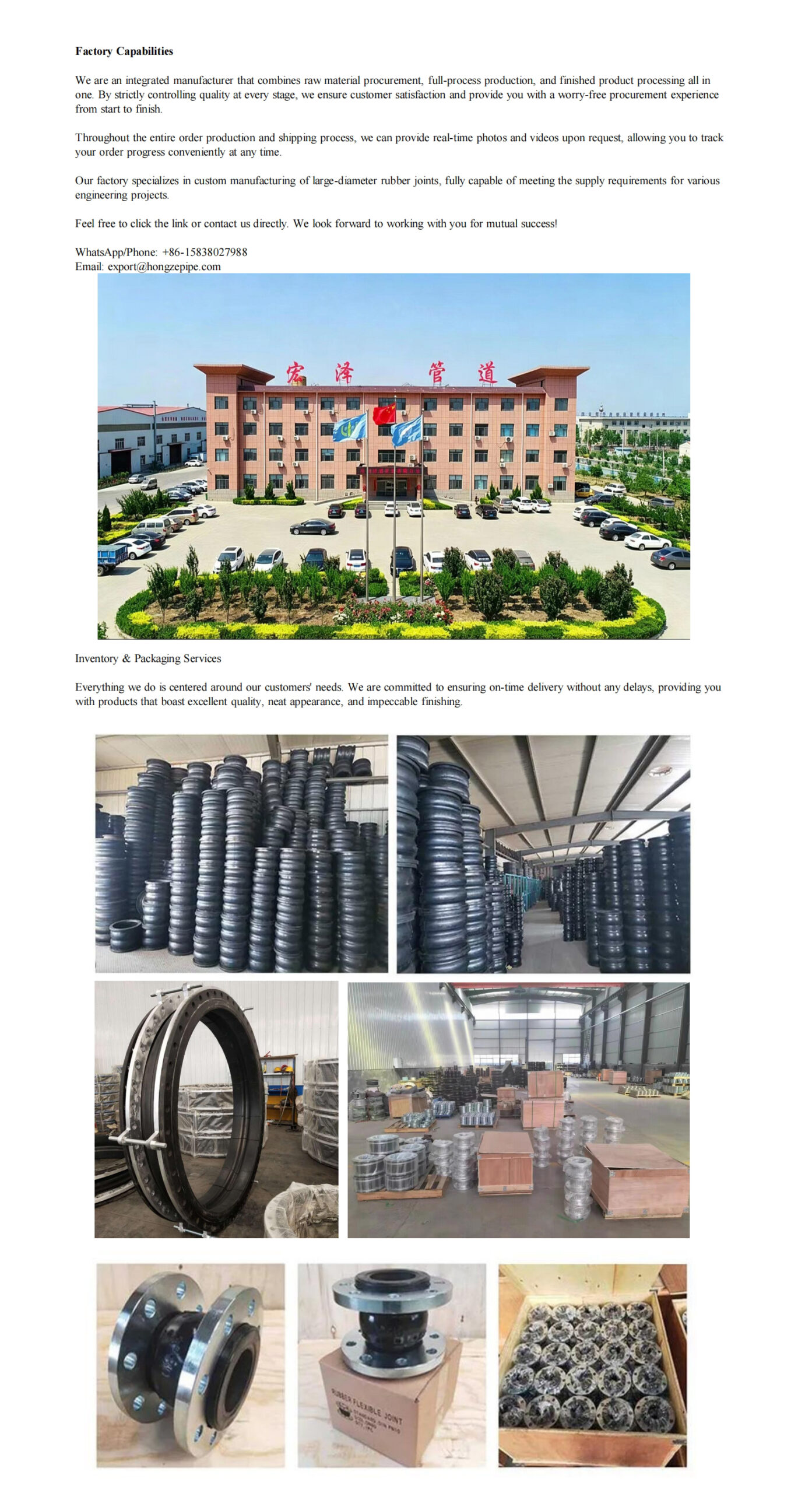
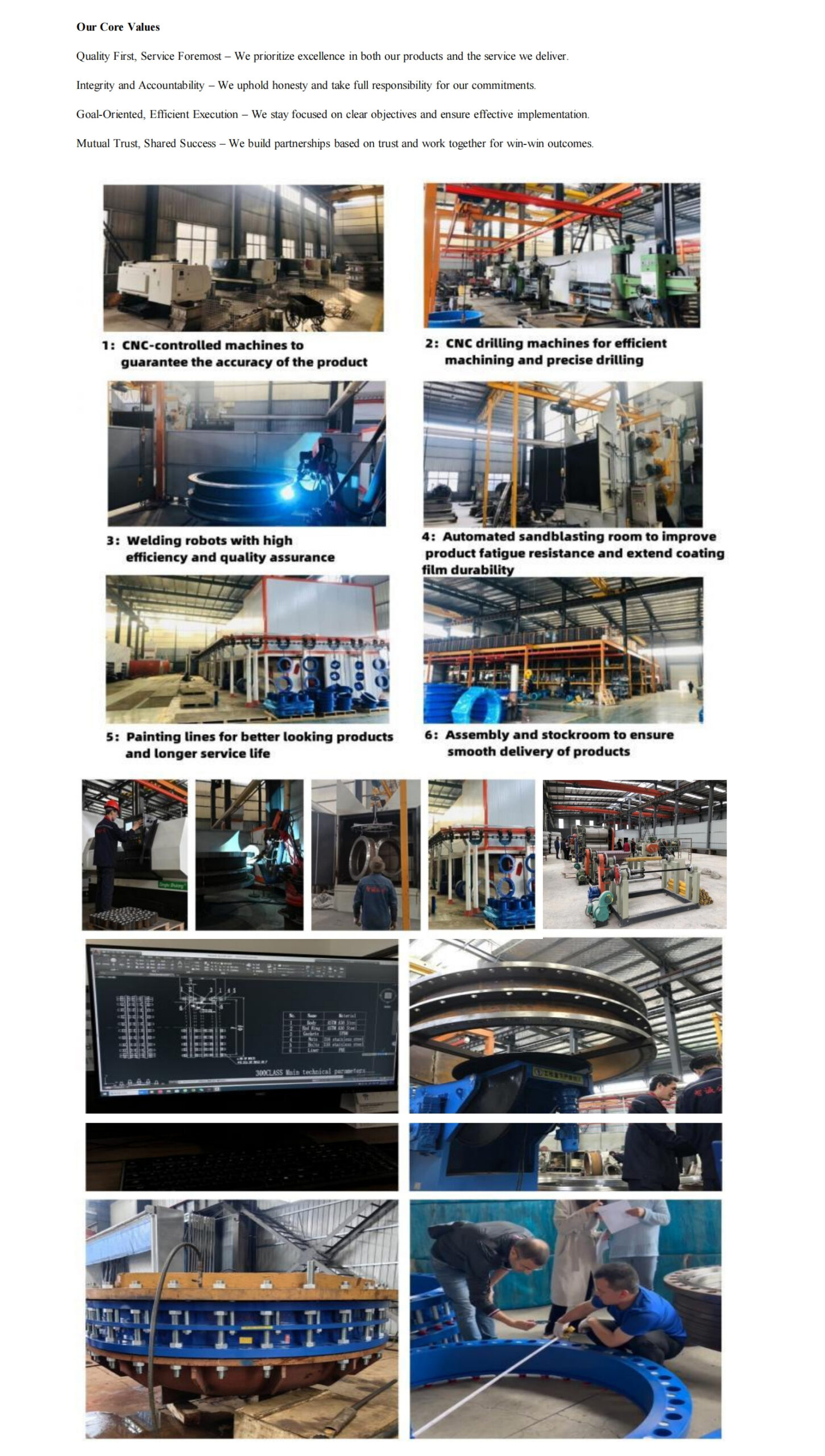
Product and Factory Information
Request a Quote for a 90 Degree Rubber Elbow
Send your nominal diameter, pressure, working medium, temperature, flange standard, flange material, required length, quantity and installation drawing to Hongze Pipe. Our team will help review the pressure rating, rubber material and flange configuration for your project.
Website:
https://hongzepipe.com/
WhatsApp:
https://wa.me/8615838027988
Email:
export@hongzepipe.com